In 1942 British military planners decided they needed another weapon that they didn’t yet have. German speaking commandos. The only group to fit the bill were German speaking Jewish refugees from Austria , Hungary and Germany.
This is the transcript of my video on this. X Troop
Foreign nationals had been put in internment camps, living in pretty harsh conditions. When they were asked to volunteer for a dangerous mission that would take the fight into Germany, they all accepted. They were going to be sent behind enemy lines, so their Jewish past and connections had to be eliminated. Any letters they had had to be burned, and any possessions with their name on it had to go.
One of these young men was Colin Anson. His father had been arrested after confronting an American Nazi sympathizer in a Beer keller in Frankfurter. He had died in Dachau. As things got worse for jews, his mother managed to get him out with the Quakers taking a group of children to Britain. Once in Britain he was in a colony getting agricultural training.
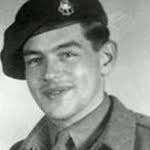
Peter Masters lived in Vienna. Shortly after the Anchluss, he was aggressed by a group of Hitler youths. Soon after, his mother saw an SS car outside. They had to go. A train took them to Munich in Germany, then another bound for France. Near the border two German officers came in to check passports. A Frenchman let them pretend they were part of his extended family. As the two officers were walking away, one said to the other that he thought that the Frenchman was pretending that they were his family. The other just shrugged and kept walking. Shortly after, they were in France.
Manfred Gans lived in North West Germany near the Dutch border. Before Hitler came to power he would get anti semitic remarks but no more. After Hitler’s rise to power Storm troopers appeared in front of their family business blocking the entrance.
Manfred’s brother, Gershon, left to go to Palestine. The rest of the family would follow later.
Moritz, the father, started the process of getting visas to go to the US, but in 1938, realised that the situation was worsening rapidly. Manfred went with his father into Holland, then Manfred went to England.
September 1939, war broke out. 70000 refugees suddenly became enemy aliens.
One day, upon returning from work, Manfred found two policeman at the door. They were taking him into internment. He collected his engineering books and as many clothes as possible in a big suitcase, then was on his way to Warth Mills camp near Manchester.
It was a terrible place. They slept on the floor on straw mattresses, with rats running round during the night. The only sanitary provision were buckets.
After nearly a month of this, Manfred was transferred to Prees Heath camp near Shrewsberry.
Living in tents in Prees heath was a great improvement but after a month of rain the tents became unlivable.
Manfred was now transferred to the Isle of Man. With less people going on holiday, the Manx government saw internment camps as a good source of revenue and jobs. Boarding houses by the sea were filled with internees. Next to Manfred’s compound were German prisoners and German pro Nazis. They would cheer when news of German victories were announced.
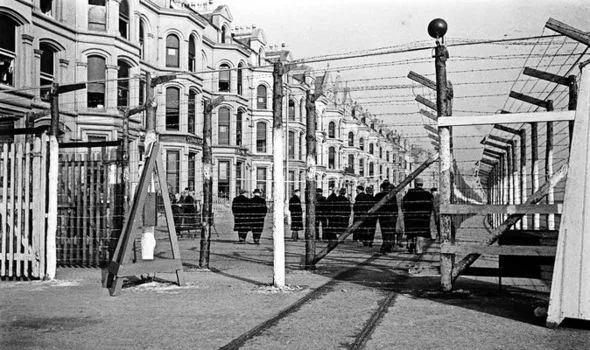
Peter Masters had lived with his family in Maida Vale, then Peter had found a job on a farm. He was amazed one day, to see his father arrive at the farm. His father Rudolph had left Vienna to escape the Gestapo. He had tried to get a visa for Britain but couldn’t get one so he had come in clandestinely. Peter and his father were arrested as enemy aliens and, after a stay in a camp in England were transfered to the Isle of Man.
Another refugee from Vienna was Paul Hornig. He had received a visa for Britain and was studying at Cambridge. When he was arrested he was sent to Canada on the HMS Ettrick. There were around 1,300 refugees and 1,300 German prisoners; The German prisoners had the cabins and the refugees were in a hold. Once in Canada Paul was sent to a camp near Montreal.
Hans Guttman escaped from Berlin to England after having been forced to tear down his synagog. On arriving in England he learned that his father had had a heart attack when his factory was raided and that his mother had been taken to a concentration camp. He was then loaded into the HMS Dunera to sail to Australia. A fellow internee on the boat, later wrote in his memoirs that their treatment by the British sailors showed that you can become vicious brute with no special training.
After arriving in Sydney the report on the conditions of the internees was leaked to the press. This resulted in Major Scott, who was responsible for them, being court martialed.
Major Julien Laydon was sent to see which internees could be sent back to England. The men were told that if they volunteered for the Pioneer corps they could go back to England. The pioneer corps carried out non combat roles like building and cleaning up. This was seen as a safe place for enemy aliens. Most volunteered for this and were soon back in Liverpool.
Being in the Pioneer corps for these men, was better than being interned but frustrating. They wanted a chance to strike back at Hitler. Some of the men had been transferred from combat units to the corps when it was discovered that they were enemy aliens.
Since 10 commando would be made up of foreign nationals. Their missions would depend on their native language.
This idea pleased Churchill. He said to look into it to see if the idea was viable.
July 2nd 1942 was the official birthdate of n° 10 commando. It as made up of the following troops.
French N° 1
Dutch N°2
Belgian N°4
Norwegian N°5
Polish N°6
Yugoslavian N°7
British troop, X troop made up of German speaking refugees.
They were the secret shock troop. They would kill and capture Nazis in the battlefield and interrogate them on the spot. Because they were nearly all jewish, they would need special protection.
Captain Bryant Hilton-Jones was chosen to lead this troop, but it had no members yet. He wanted only the most intelligent men to be chosen.
That’s how Manfred Ganns, Peter Masters and Colin Anson became part of X troop.
A new private joined the group in the Isle of Man, asking questions of the others about their origins and plans. He took Peter aside one day and proposed joining the X troop. The private was actually an intelligence officer.
Throughout the autumn of 41 and the following spring, that scene was repeated many times.
In August 42, the men were given a rail ticket for London and told to report to the Grand Great Central hotel in Marylebone. There they were told to stay in the hotel until they saw their name on a notice board with directions.
The process lasted over a week but one by one their names appeared and they went as instructed to the interview. The interviewers were Hilton Jones and a Hungarian , Sergeant Georges Lane, the first member of X troop.
About a third of the interviewees were accepted to go on to combat and explosives training.
After being told by Hilton Jones that they were going to become commandos, he asked one of them their name. The man answered with his name, but Hilton Jones said no it isn’t. You must all leave this room with a new name and it must not be Montgomery.
This was a great shock for the men. Their name was the only tie with their family. But, this was the first step in the transition from stateless Jewish refugees to British Commandos.
Gothard Baumwollspiner became Gerald Barnes. Konstantin Goldberg became Kenneth Garvin. Many tried to keep their first name.
Colin Anson had been called Claus Asher. When he went into Hilton Johns office he still had no idea of a name, but then he heard an Avro Anson fly over. I’m Colin Anson, he said.
When the first recrute, who had helped at the interviews, had to change his name from Lanyi Gyorgy he thought of George Smith. Coming from his mouth it sounded like Schmidt. Hilton-Jones said don’t be a fool you can’t even pronounce it. They decided on Georges Lane.
The first interviews of this group had taken place on the 20th august 1942, the day after operation Jubillee, the raid on Dieppe. The first edition of X troop had taken part in Jubilee. Their mission, devised -by Ian Flemming, was to get a Kriegsmarine Enigma machine out of dieppe. Like the raid in general, their mission failed and the majority of the troop were casualties. Hilton-Jones vowed that that wouldn’t happen again. Members of X troop would be the most intelligent and the mosst highly trained.
They were taken to Aberdovey in Wales, the HQ of N° 10 commando.
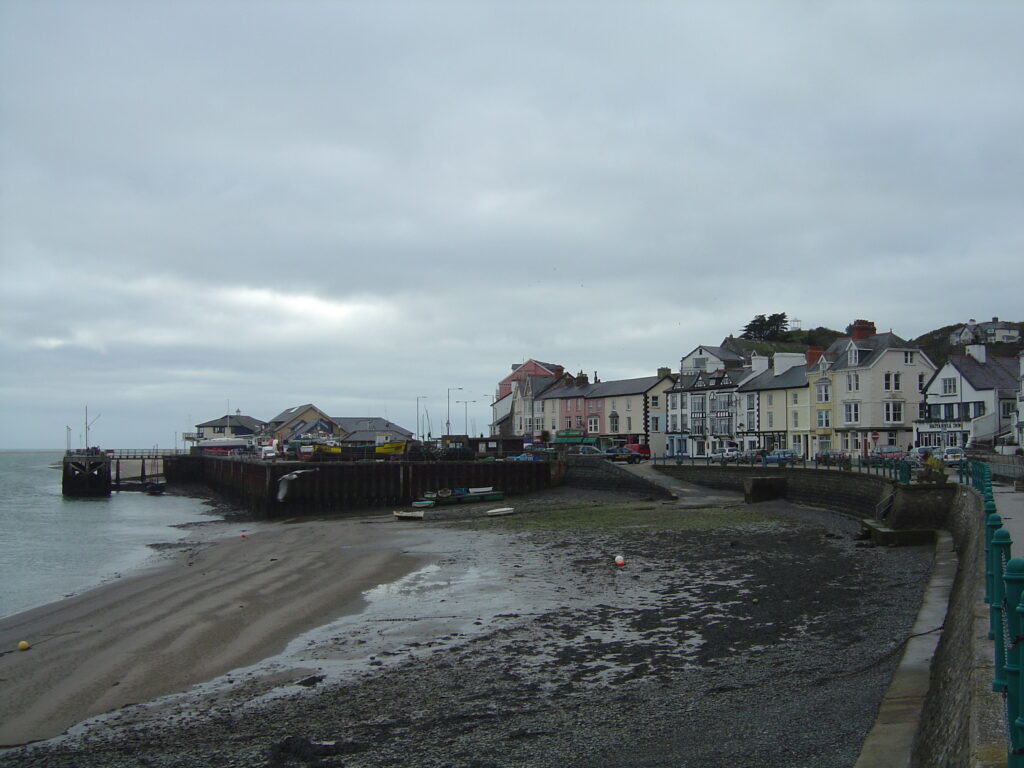
On arrival, they were grouped together and one by one advanced towards Hilton-Jones to receive the Commando green berry. They also exchanged their hobnail boots for rubber soled boots. Commandos had to move quietly.
There were no organised billets for them. Hilton Jones sent them into the village to knock on doors and ask to be lodged. Nobody refused. Tony Firth had thought that rather than knock on modest house doors, he’d find the biggest house in the village. He and Colin Anson were taken in.
In the morning Hilton Jones told them that before breakfast they would take an 8 mile run up and down the surrounding hills. Manfred Gans was a long distance runner so looks foreward to it. Colin Anson wondered if he would make the first mile. Everybody made it but some threw up their breakfast. The next day they did an eleven mile run in full kit. Soon they would be doing 40 mile runs.
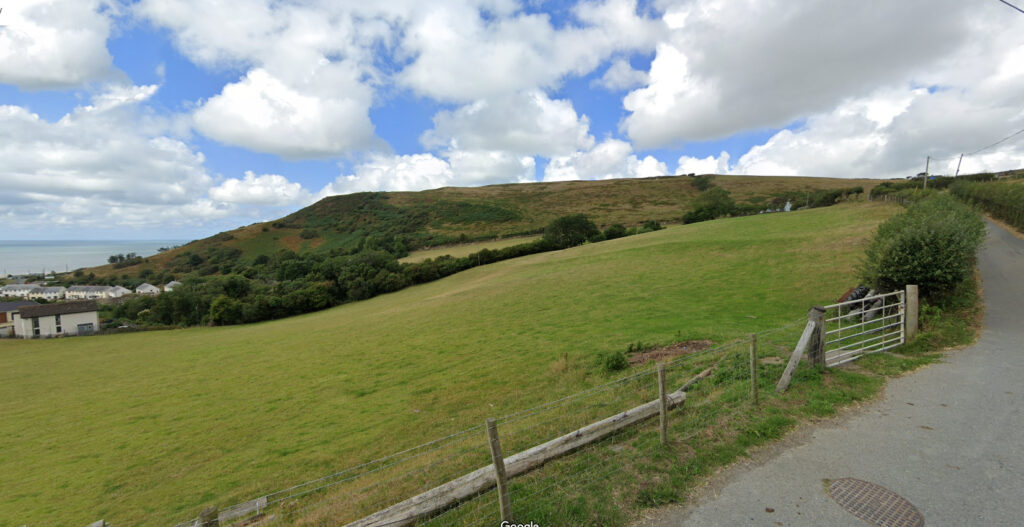
Hilton jones never asked them to do anything he couldn’t do. He was usually with them in front. Only Manfred Gans could out run him. On one run some men collapsed and th eothers carried on to the finish. Hilton Jones was livid. He admonished them, ” You don’t leave any one behind. if someone faints you carry him”
A large part of their training was carried out on Snowdon, the highest mountain in Wales. They soon knew it like an old friend.
They had to be capable of using, taking apart and reassembling many different weapons including german guns.
After less than a month at Aberdovey they were sent to Achnacarry in Scotland. The training there was run by Leftenant Colonel Vaughan. He didn’t like “ruddy foreigners” and gave them a hard time.
Here thay learned how to be invisible in the field and operating at night. Hilton Jones told them to sleep during the day for a month with exercises during the night.
At the end of their stay they had a night exercise crossing the loch, then the country side unseen. Colin Anson’s uniform was frozen solid, it was so cold.
Leftenant Colonel Vaughan, who never believed those rudy foreigners could make the grade, admitted to Hilton Jones that those bastard foreigners were quite fit.
Back in Aberdovey the villagers had realised that these men weren’t run of the mill soldiers. Thay had changed their names but the accent remained. If they were asked what nationality they were the answer would be “Vee are English”
In May 43 four men were chosen to take part in operation Huskey. That would be the landings in Sicilly, coming from North Africa.
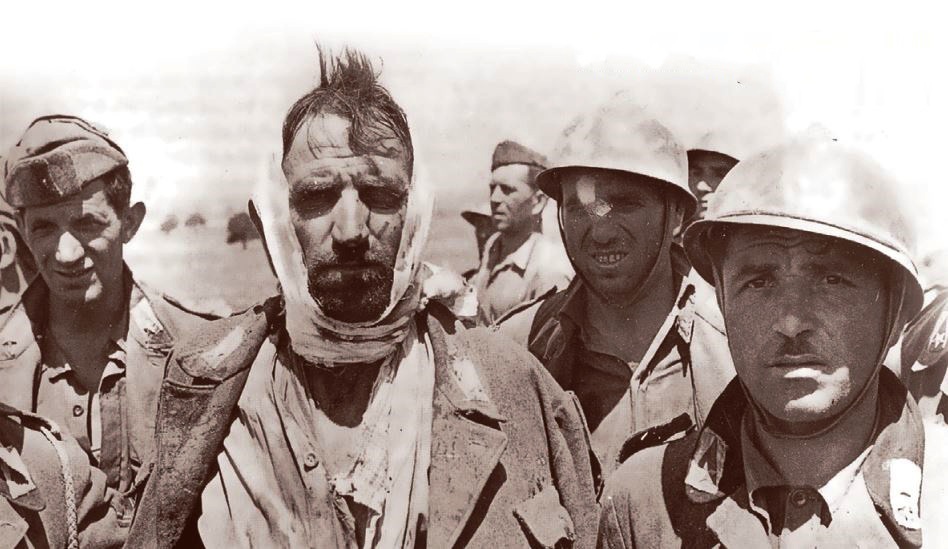
Paul Streeten went in the first wave with the 41 RMC just after midnight on July 10th. As soon as they landed they realised they were on the wrong beach. The senior officer led the attack but was cut down by machine gun fire. After waiting for the fire to stop they carried on the attack shouting loudly. The Italian troops soon surrendered.
20 minutes later Colin Anson was heading in with the 40 RMC. They were amazed to find that the Italian pillboxes were camouflaged with hay. A few phosphorous grenades set this blazing. The Italians soon surrendered. Inland they were held up by snipers in an olive grove. Mortars were fired to dislodge them.
The men of the British X troop had been chosen for their fluency in German. Here Colin was interrogating Italian prisoners. He did the best he could.
During the next few days they worked up the East coast of Sicily. Their commanding officer was wounded and Colin Anson found himself leading the troop. He seized a ladder from a farm and organised a party to take the leftenant to the aid station. Wanting to leep on good terms with the locals, he returned the ladder and apologized. He couldn’t find the wood for a ladder so made walking up movement with his fingers. “Ah La scala” the farmer said. Si, la scala. Colin started singing a scale. The british commandos thought he was fluent in Italian as well as German.
The Germans were defending a vital bridge near the coast. A plan was hatched to outflank them. Colin Anson was with some of the 40 RMC on the HMS Queen Emma. It would outflank the Germans then they would go a shore in the assault craft carried on the ship. During the night they were attacked by a Stuka dive bomber. Colin had been sleeping in a hammock on deck to keep cool. He was blown on to the deck by a balst from a bomb that hit the ship. He went below decks to see what he could do to help. He helped some wounded men to the aid station. He then said to the medic ” if you’ve got any bandages left, i think I’ve got a scratch on my head”. The medic stared at him and said to sit down. A peice of shrapnel had made a whole in his skull. In the operating theater they could see his brain. He was taken to Alexandria then Cairo. He had many operations and months of recuperation.
Paul Streeten was moving up the coast with the 40 RMC. He was soon seconded to the Long Range Desert Group. His Italian was improving rapidly so he could interrogate Italian POWs. They were given the mission to breakthrough the enemy lines to start a bridgehead which could then be enlarged. A mortar fell near Peter giving him devastating injuries on his left side. He wasn’t expected to survive.
In March 1944 Colin Anson was back in Italy. He was to join 40 and 43 commando on a mission to help Joseph Tito who led the Yugoslavian partisans against the Germans. Thre partisans had taken back the island of Vis from the Italians. It was crowded with partisans and British troops. From there Anson took part in raids against the nearby German troops.
Tito and his group were held up in Drvar. The Germans mounted an operation to eliminate him and his followers. In reponse to this the Britrish otganised operation Flounced. The aim was to launch an attaak on Brac with members of the 40 and 43 commando and Yugoslav partisans. it was hoped that the Germans would think there was a full scale invasion on and divert troops from Drvar to allow Tito to escape.
The mission started at midnight on the 2nd June 44.
As soon as the landing craft touched down on the beach the partisans started smoking. They wanted the Germans to know they were there but not just now. The commandos told them to put them out.
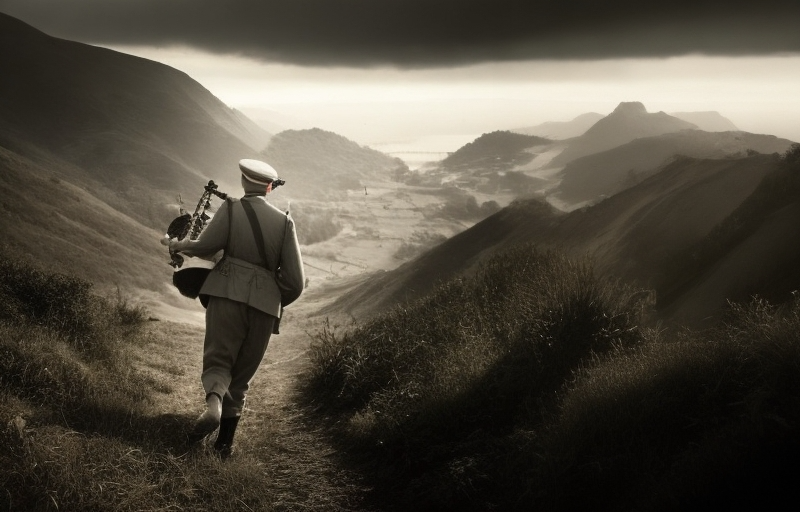
Leftenant colonel Mad Jack Churchill led the operation. He had a meeting with his officers and sergeant Anson. Amson’s unit was to lead the attack against a German strong point on the high land in the middle of the island. The others would carry out flanking attacks. They were running ip the hil. The only sound was their breathing and stones moving under their feet. Suddenly two Messerschmitts flew over towards the beach, no doubt aiming to destroy their landing craft. Then two Hurricanes dropped down on their tails. An impressive dog fight ensued , ending with the Messerschmitts retreating.
The sound of the dog fight and the commandos cheering meant that there was no element of surprise. Mortars and machine guns opened up. Many commandos were falling. They wouldn’t be able to capture the strong point but that didn’t matter. They were just there as a diversion. They were to hold on till ordered to pull out. Jack Churchill started playing the bagpipes to rally the men. The Germans tried to take him out but no one managed to hit him. They were ordered to attack the strong point again. Jack Churchill set out with his bagpipes, broadsword and long bow towards the Germans. The fighting continued for a day and a night before they wer told to pull back to the beach. The operation was a success in that the Germans had diverted 3000 troops towards Drvar. But at a cost. 40 RMC suffered at least 6 dead and 41 other casualties. The 43 had losses as well.
In May 43 the X troopers in Aberdovey were transferred to Eastborne with the other N° 10 interallied commandos . Colonel Dudley Lister wanted to make one cohesive unit. This idea didn’t work out as each nationality tended to keep in their own group.
September 43 X troop were transferred to Littlehampton. Here they trained for parachute jumps. They were taken up to Ringway neaar Manchester for jumping from a platform, then a balloon then 8 flights. Several men were injured during these jumps. The first jump from the platform was carried out by Hilton Jones. He plummeted to the ground but wasn’t hurt and did a second successful jump straight away. There were afew sprained ankles and Victor Davies was in a plaster cast for months.
The last exercise was being dropped in Scotland with nothing to eat. After a week in Scotland they were given 24 hours to get back to Littlehampton.
Bill Watson did this by stealing a motorcycle. When it ran out of gas he sneaked onto a train then stole a jeep for the last leg of the journey.
One X trooper was arrested for wearing a british uniform and having a german accent. Hilton Jones had to get him out.
Members of X troop participated in reconnaissance raids on the French coast. These were to gain intelligence or capture prisoners to interrogate.
In April the film taken from a bomber showed a strange phenomena. A bomb falling in the sea near Houlgate, short of it’s target set off a chain reaction. Was this some new deadly weapon. Operation Tarbrush was launched to get a sample of what ever this was..
Georges Lane went in from a motor torpedo boat and brought back the information that it wasn’t a new super weapon but Teller mines on beams in the sea. The mines had rusted and the bomb had set off a chain reaction. This was good news but the planners weren’t completely satisfied. 2 more missions were carried out to be sure. On the last mission Lane and Captain Woodridge went in on the beach at Ault. It was three weeks before D-day.
Hilton Jones was in the motor boat. Lane and Woodridge were overdue for the planned rendezvous. They went in close to the shore but found nothing. They had to leave or jeopardize the whole operation. He didn’t find anyone because Lane and Woodridge had been taken prisoner already.
Crouching in the surf by check hedghogs, machine guns started firing. Had they been seen or was it the Krauts letting of steam. Everything was quiet again. They had been making their way back to the motor boat when a German E boat approached They thought of trying to pretend they were fisherman but soon realised that was futile. They threw their weapons in the sea and raised their hands.
They were locked in separate cells. During the initial interrogation they kept hearing the words Gestapo and SS which was worrying. Lane wasn’t worried about giving away D-day secrets as he didn’t know any, but he was worried about giving away details of the X troop. They were then driven inland for some time. They didn’t know where they were, but it was the château de La Roche Guyon. on the river Seine not far from Paris.
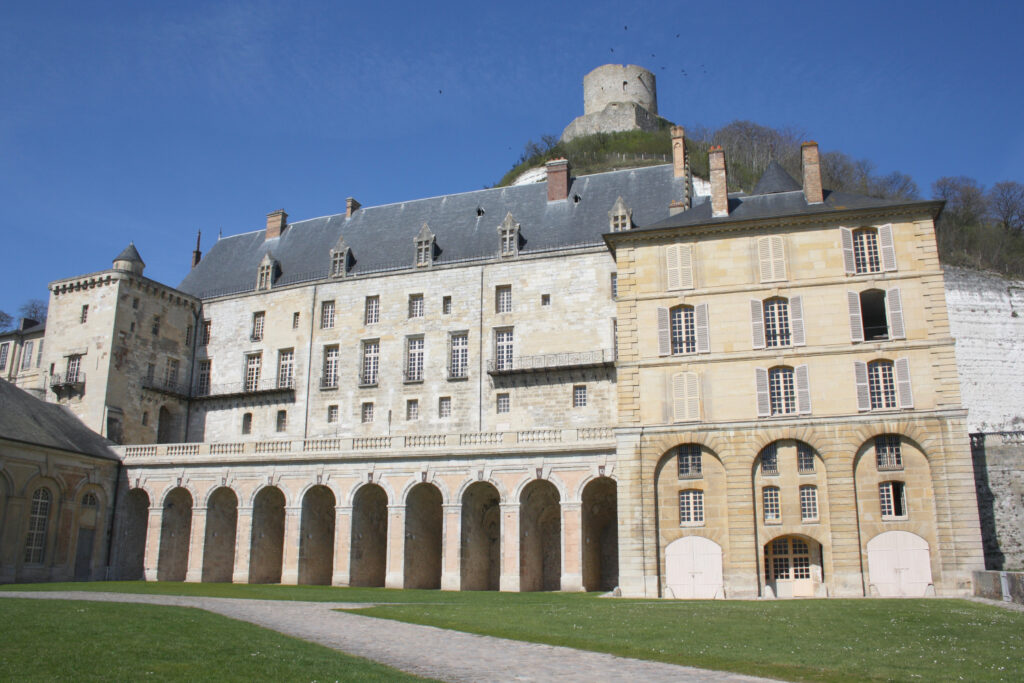
The two officers were separated and the soldier guarding him said he should tidy himself up as he was to interrogate by someone important. He was led into an office. There was somebody by the fire place with his back to him. The person turned and Lane recognised Rommel.
Rommel said you realise you are in a tricky situation. Lane replied that it wasn’t tricky, he was a POW.
But my people think you are a saboteur.
If you thought I was a saboteur, you wouldn’t have invited me for tea.
How’s my friend Montgomery , Rommel asked.
I don’t know him personally but you’ll meet him very soon.
Rommel then asked him where the invasion might be.
I’m just a lowly officer not privy to such information.
After some time Lane was relieved to be taken in charge by the werhrmacht and not the SS or Gestapo. He was taken to a POW camp.
His cover story of being Welsh didn’t stand up for more than 5 minutes amongst the British POWs. They thought he was a stooge. He went to see the senior British camp officer. He explained that he was a member of X troop. What the hell is that. I’ll explain said Lane.
Once they checked out his story, he gave some useful information about Rommel’s HQ. With a clandestine transmitter this info was sent to London.
Lane now wrote a letter to his wife Miriam Rothschild to inform her that he was alive. She already knew, as a message by the Germans had been intercepted about two British officers captured on the beach.
Hilton Jones was awarded the Military cross for his command of operation Tarbrush. The information gained was of vital importance for the D-day planners.
On the 4th June the commandos were grouped near Southampton. Lord Lovat came to give them a pep speech and told them that the invasion had been postponed 24 hours due to bad weather.
On the evening of the 5th they were bused to Warsash.
X troop had never fought as a distinct unit. They were in demand from other units due to their German fluency and general excellence.
For D-day Masters was seconded to the bicycle troop, officially N° troop of N° 6 commando. They were to ride ahead towards Benouville bridge where the commandos were to relieve the airborne. They would be the first to come up against the Germans retrenched inland.
Manfred Gans, Maurice Latimer and Peter Moody were to go with 41 RMC. Their mission was to land on the western flank of Sword beach and join up with 48 RMC coming from Juno beach.
As the commando ship convoy sailed past the isle of Wight with Lord Lovats ship in the lead, Bill Millin played the road to the isles on his bagpipes.
The LCI carrying Peter Masters beached and he was going down the slippery ramp holding his bike in one hand and his tommy gun and the rope in the other. The beach wasn’t as it should have been. The 8th brigade should have cleared the beach before the commandos landed.
Lord Lovat was in the following landing craft. He was wading ashore. The man just behind him was cut down. Bill Millin was following playing the bagpipes.
Harry Nomberg was coming in with 3 troop of N° 6 commando. As he moved off the beach the first two Germans he met surrendered to him. He interrogated them on the spot. They told him where the gun emplacements and the mine fields were.
Manfred Gans , at the other end of the beach, ran through a gap in the barricade blown by the sappers. There was a platoon of about 20 Germans who all put their hands up. he said “good morning gentlemen, where is the path through the mine fields”
They were so shocked to be addressed politely in perfect german, they pointed to a path . He led the group of commandos with him through the mine field to the RDV point near Lion sur mer. They didn’t know then, but half the commandos o 41 RMC were casualties.
Manfred was waiting for backup at the assembly point. He saw one commando approaching. It was Maurice Latimer. Latimer suggested they wait no longer and continue to Lion sur Mer.
45 RMC were the last to land. They were to cross Benouville bridge (Pegasus) then carry on to Merville battery to make sure it was out of action. Georges Sanders was with them. They landed in the wrong place and seemed to be drowning in their own blood. Once out of the water Georges ran to get behind the dunes.
After witnessing Bill Millin playing the bagpipes on the beach, Masters headed in land with the cycle troop. They were soon held up by a sniper and all dived for cover. Masters heard the distinctive sound of a Sherman tank approaching. The commander had his head out of the tank. Masters shouted to him to be aware of the sniper. in the trees. The tanker closed his hatch then shot up the hedge with his cannon and machine guns. The commandos had no trouble getting across the field.
They carried on to the RDV point to find that the commandos without bicycles had arrived first. Lord Lovat was there. Masters went over to some prisoners to interogate them. Lovat called out ” ask them where the howitzers are”
The prisoners didn’t reply. He realised they must be Russian or Poles. He tried French, and Lovat joined in but still no replies.
Lovat instructed the bicycle troop to carry on to Benouville. It was hard going on those bikes. Their Tommy gun was strapped acros their backs and their pack was in a holder on the handle bars. The weight pulled the holder down on to the front wheel, and would block now and again, especialy when they were trying to accelerate past snipers.
On a hill before Benouville the lead man was hit by machine gun fire. They all dived for cover. Captain Robinson said to Masters to go down to the village to see what was going on. How many men shall I take?
No men just you.
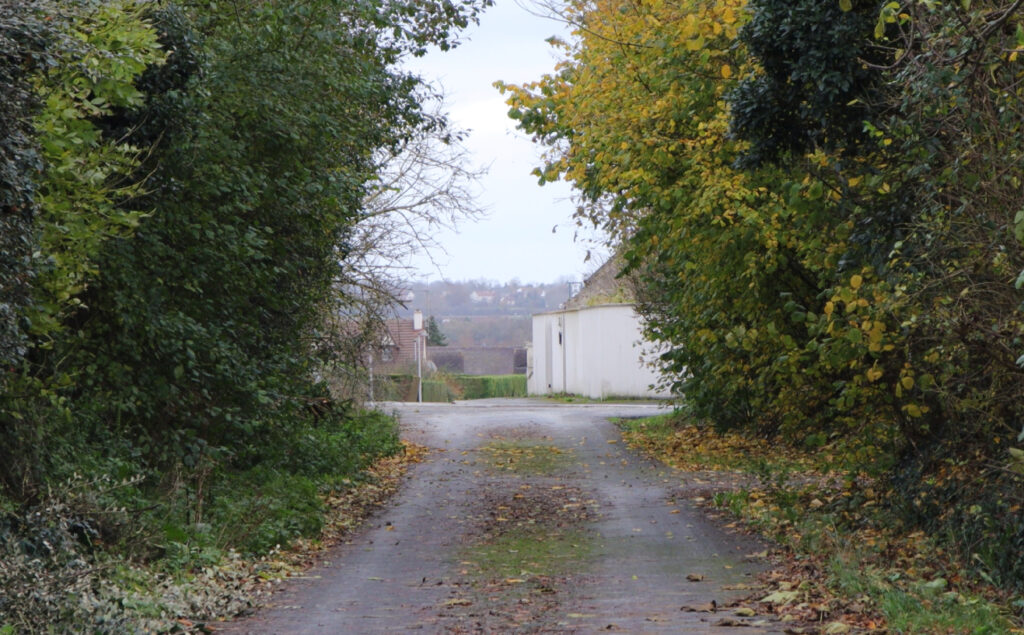
Peter remembered that Miriam Rothchild had warned them of. The British might use you as a suicide squad. So beit he thought. If this is the only way.
Walking down the main street there was no firing. He rembered Carry Grant in Gunga Din. To quelle an angry mob, he shouted that they were all under arrest.
Peter called out in perfect German. All right . Surrender, all of you. You’re surrounded. You don’t have a chance.
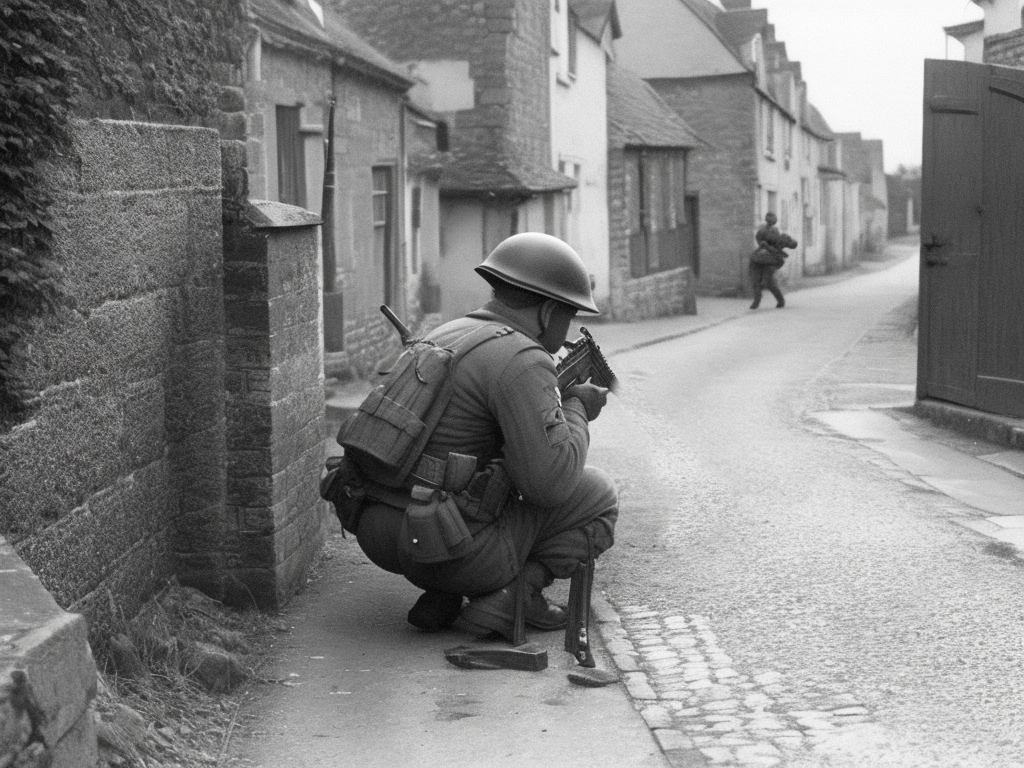
A German stood up behind a wall and looked at Masters for a moment. Then he fired but missed. Masters went down on one knee and fired his Tommy gun and missed. He fired again but the Tommy gun jammed. He dived for cover to clear his weapon.
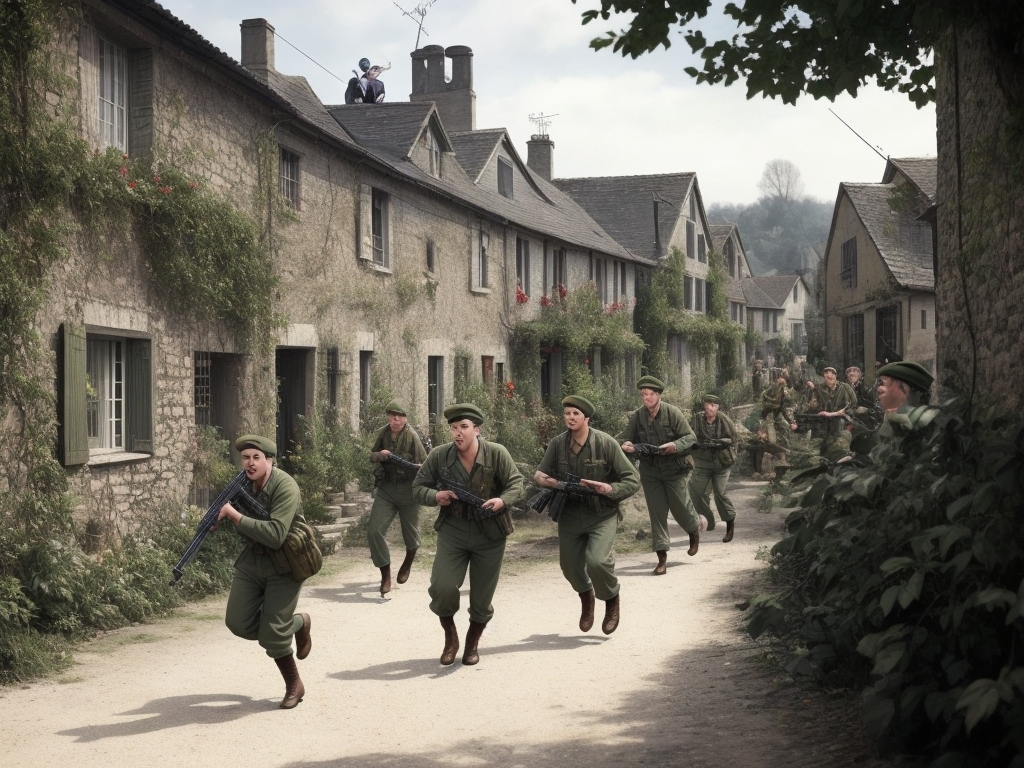
He heard a noise behind him. The bicycle troop was charging with bayonets fixed. He joined them and most of the Germans ran away. Corporal Thompson found two and shot them. They weren’t dead so Masters interogated the least wounded. He found that they were Austrian teenagers. Thompson was shocked at learning that. He asked Masters to apologise to them for him.
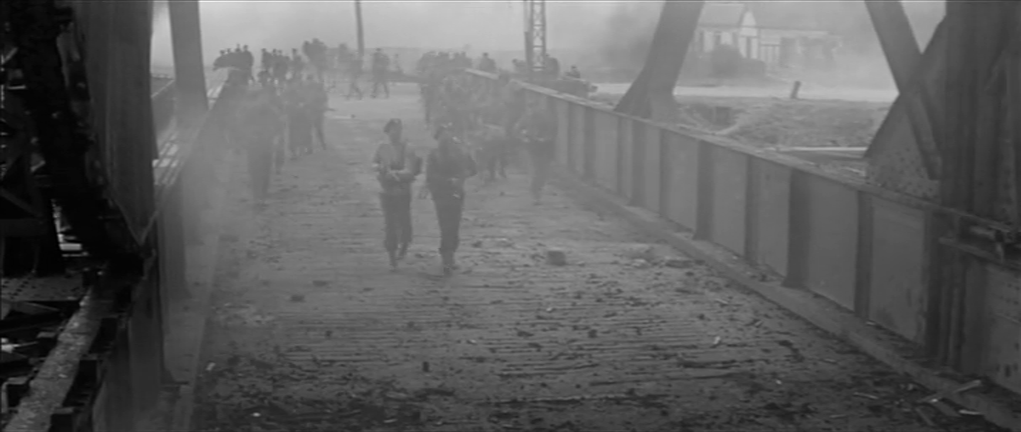
They now crossed Pegasus bridge with bullets ringing on the frame work. On the second bridge at Ranville one man was hit by sniper fire.
Lord Lovat arrived about half an hour later.
At the other end of the beach Manfred Gans and his group of commandos had reached Lion sur mer. They moved along the edge of the street going from house to house. Manfred went into a house as a bullet from the next house just missed him. He wore black tennis shoes instead of boots. He stealthily went up the stairs of the next house to find a civilian firing at the German gun. It was an Algerian using a rifle from the 1870 Franco Prussian war. Manfred persuaded him to join them.
ColonelTim Gray caught up with theml with the survivors of 41 RMC. Gans told him about th eGerman gun position further up the street.
3 AVREs turned up to take on the strong point but the three of them were knocked out. In the light of this set back Gray decided to wait for reinforcements the next day.
Georges Saunders was heading towards Merville with the 45 RMC. Near Salenelles they came under artillery fire and Saunders was separated from the others. He sheltered in a cellar and helped himself tothe wine and cheese stored there. When the artilery stopped he moved out and found a bicycle. Approaching a crossroad he saw agroup he took for his comrades. He waved to them. One of called “Das ist ein Englander” and fired at him. He dived in to a ditch. The Germans were searching for him. If they got close he woud throw a grenade and move or fire and move. He realised he couldn’t avoid them for ever in this way. He found a pond and went into it, pulling a camouflage net over himself. They finally gave up and went away. He could now get back to the British lines.
The Canadians in the 6th Airborne were at Varaville on the far Eastern flank of the invasion. They were to blow a bridge over the river Dives and capture the château. Peter Masters and the bicycle brigade arrived there in the late afternoon. The Canadians said they needed no help as they were about to overcome all resistance, but asked Masters to intergogate a German officer.
The German officer asked Masters how he spoke such perfect German. I’m the one asking questions he said. The officer told him there were strong forces to the South.
The commandos were now to hold the positions taken by the Canadians untill relieved.
They had moved the farthest of any troops on D-day. While they brewed tea they wandered if the invasion had perhaps failed and they would be isolated. The radio operator managed to pick up the BBC German broadcast. Masters coud relay to the others that the onvasion had been a success.
Around 3am on the 7th the commandos at Vareville heard a machine gun strafing the field near them. One of the commandos had got the 75mm gun working and fired back at the Germans. The Germans knew where the gun was and sent a mortar on to its position. A commando was killed. With their only heavy weapon out of action they thought that would be the end. Captain Robinson didn’t want to pull out without orders. Then the 75mm opened up again. The radio operator had no reply to his calls and the battery was fading. ust before first light the radio operator got through to HQ. The answer came back to retreat immediatly to Amfreville avoiding Breville which had been retaken by the Germans.
Near Breville they started cutting across a field to avoid the village but came under fire. The men were franticly pedalling to get across the field. Three men were hit. They were picked up later by ambulances.
On the outskirts of Amfreville Masters saw an allied soldier. It was Gerald Nicholls of X troop. He’d gone out from Amfreville to find them. The cycle troops now carried on to help the 45 RMC at Franceville plage near Merville battery. The Germans had gone back into the battery.
Masters was sent ahead to reconnoitre. He was surprised to find a bar in Salenneles full of civilians. They were only too happy to share what they knew about the German defences. The Germans had been working all night to reinforce it. Suddenly a jeep screeched to ahalt outside.
Georges Sanders walk in. He was the X trooper who had hidden in pond. They were happy to find each other alive after 24 hours.
Saunders left Masters at the bar then he was with the 45 RMC attacking Franceville. Saunders and Percy Shelly were scouting ahead of the others. Shelly had chosen this name because he liked Shelly’s poems. They came under fire in a courtyard and Saunders got some shrapnel in the leg. A Panzer was coming up behind them. Shelly pulled them both in to a coal shed. As the tank went past, he ran after it and threw a phosphor grenade in the air intake. The crew opened the hatch and Shelly threw a grenade in the open hatch.
Saunders limped back to the camp and found that a German ambulance had got there by mistake. He told the driver to do as told and he would be OK. They loaded up the ambulance with wounded and set off South with Saunders next to the driver. They hadn’t gone far before they were stopped by German soldiers. Saunders told the driver to keep up the cover story of taking German wounded to hospital which he did. But , the Germans didn’t believe him and commandered the ambulance.
Saunders was taken to a POW enclosure after being interrogated. He didn’t stay there long, but climbed over the fence. He was caught and ended up in front of the same officer. He was now loaded into a train. He jumped out as soon as an opportunity presented itself. he was caught again and this time shackled in the train. He ended up in a POW camp.
Manfred Gans with the 41 RMC in between Sword and Juno was now tasked with attacking the Douvre Radar station. On D-day the Canadian troops had tried to get in but failed. Now the Commandos took over. It was the strongest strong point in the region. There were strong bunkers inside, the whole site was surrounded by 20 ft high fences on each side of a 300 yds mine field. It was defended by anti rank guns, mortars and MGs.
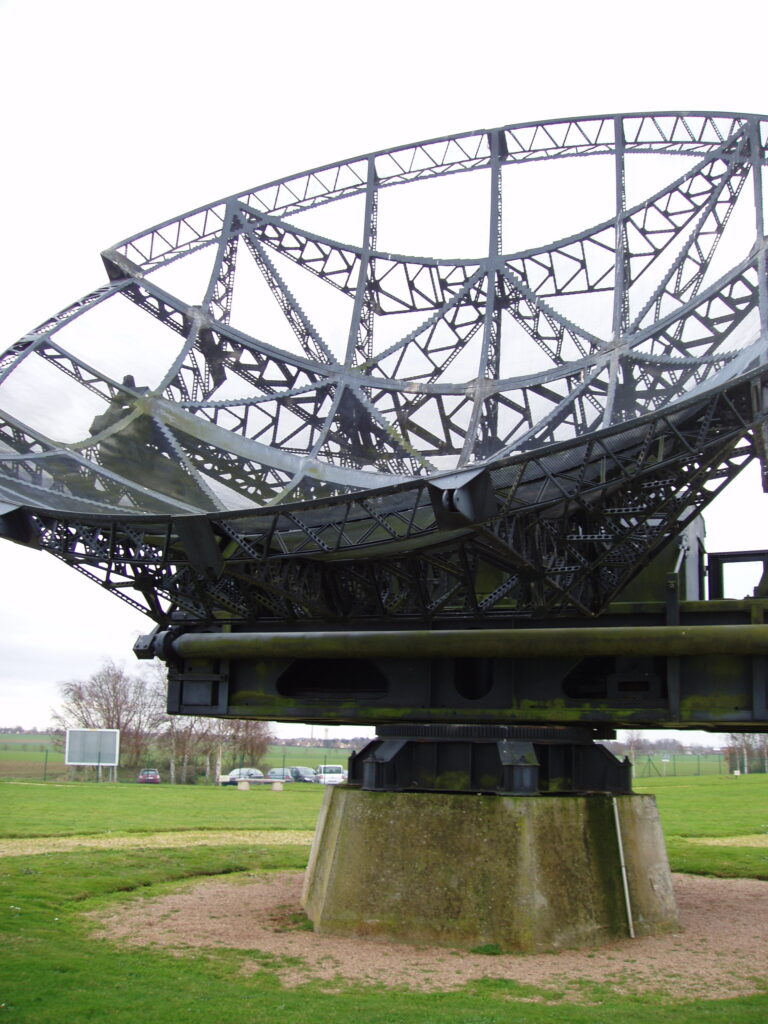
The whole site, in two parts was called Distelfink which means Goldfinch. There were Bunkers in Distelfink 1 called Moltke and 1 hindenberg. On the 11th, Gans and 2 marines were heading to Moltke. They cut through the first fence then Gans led them through the mine field. If you ran you had a good chance of setting of off mine. If you crawled, you’d be there so long you risked being seen. Gans went through crouching and feeling the ground in front of him. If there was a mine the ground would be softer due to being turned over. At the second barbed wire fence he checked that it wasn’t electrified before cutting it. They visited the gun positions and found them to be unoccupied then saw that the bunker had heavy steel doors. Gans led them back out again, making sure to connect the cut wire.
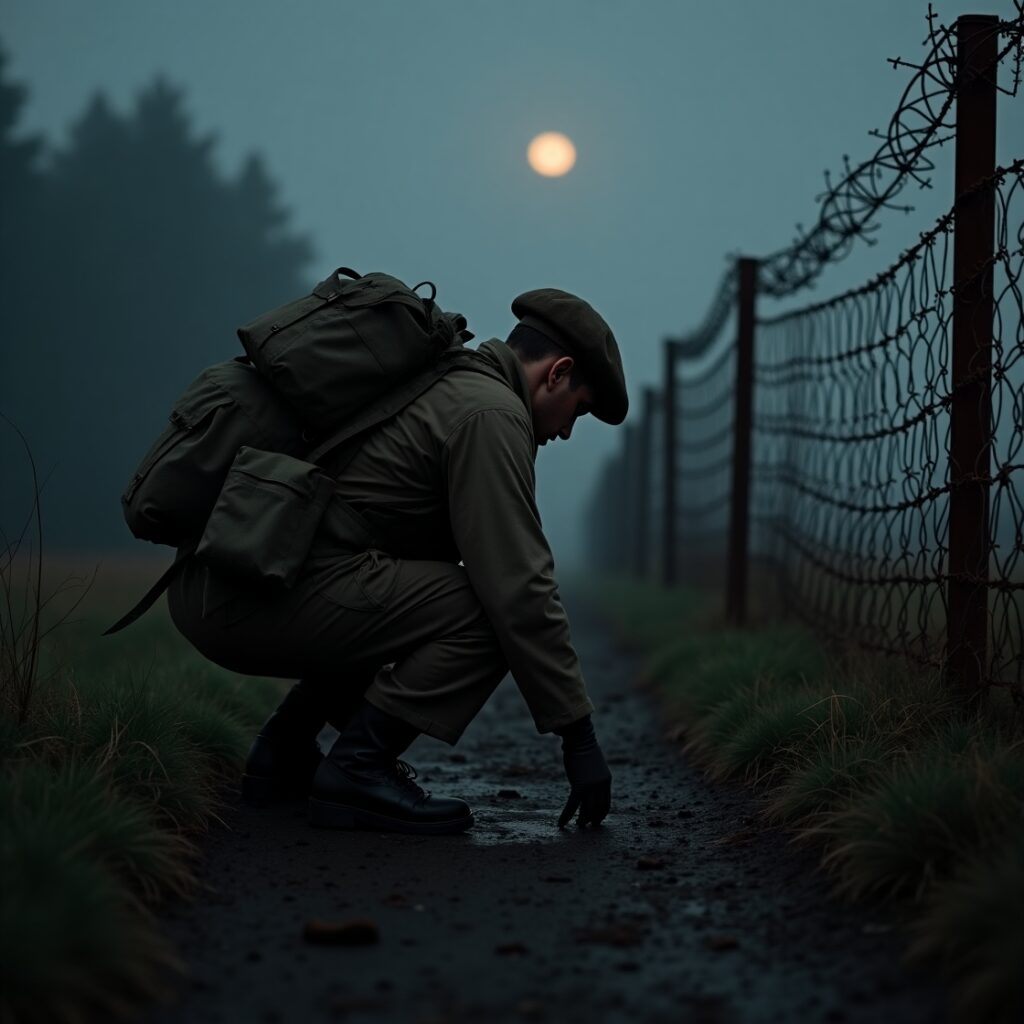
Two nights later he was tasked with leading a group in to take over the machine gun pits. He went in the same way but noticed new mines had been laid. He covered the first one with a handkerchief. As he went forward a mine went off behind him set off by a marine. He realised the mine in front of him would go off so rolled into a ball. He was covered in dirt from the blast. They all retreated and the wounded man was taken out just afterwards. He lost a foot.
On the 13th A full scale attack was launched. Maurice Latimer put a Bangalore through the fence and set it off. It only half exploded. he went to set it off a second time and his hand was badly burnt. he ran out with machine gun bullets whistling past him. His hand was so badly burnt that he had to go back to England. He was furious that he was out of the fighting, but he would be back.
Douvre radar station was finally taken on the 17th June by a concerted attack by tanks and commandos. Sherman Crab tanks led the way through mine fields followed by the commandos. Manfred Gans saw a periscope sticking up out of a bunker. he smashed the glass and jammed a phosphorous grenade in the tube. From a distance he fired at it to set it off. This sent white hot phosphorous down the tube into the bunker. The Germans started spilling out with a white flag. 150 came out.
Newly arrived troops were amazed to see a handful of commandos marching over 200 German prisoners towards the beach.
At the Saulnier farm in Amfreville, where Lovat had his HQ, they were being fired on by a German half track with a Nebelwerfer on it. It would fire then retreat. Shelly and Stewart volunteered to seek it out and destroy it. Every time it fired they would close in a bit. Then they were close enough to throw a grenade into it. They immediately followed and fired on all the drew. They now drove it back to Amfreville where it stayed for a few weeks. Shelly and Stewart received battle field commissions for this action.
After the mitigated success of D-day there was several weeks of stalemate. After ST Lo being taken and Caen on the 18th and 19th July, The situation started to change. Operation Cobra on the 25th July, made a breakthrough of the German defences, and tjhis became a breakout. During the stalemate X troopers had taken part in many patrols. Now they were to participate in the push Eastwards from the Bavent ridge.
X trooper commander Bryan Hiton Jones had been wounded on a mission. He had been missing for so long he was considered dead. Hilton Jones was British. Now an X trooper Leftenant James Griffith, was appointed Commander of X troops. This was good news. These enemy aliens were now trustworthy enough to command a unit.
X trooper Henry Gordon was with the 46 RMC when they took Pont L’eveque. Gordon was sent to the hospital to check that here were no German soldiers there. Working through the wards with his Tommy gun ready he just found badly wounded men who couldn’t be moved. In one ward he stopped short. There in a bed , reading a book, was The Skipper, as they called Hilton Jones. “We thought you were dead.” he’d been saved by a German Doctor Hartmann, who had treated his severe stomach wounds. Hilton Jones was in a condition to be moved, but when the doctor heard the British were arriving, he told the commander that Hilton Jones couldn’t be moved. By the end of August he was on his way back to England for treatment and convalescence.
News of the Skipper being alive spread rapidly.
Manfred Gans now had a rendezvous with a resistant at Duclair who was to organise the crossing of the Seine. Gans jeep was the first across. They were soon in Barintin. There were great celebrations in the town. The streets were packed. But, there were still snipers around. Gans went to search out a German officer.He grabbed him by the neck and threatened to shoot him on the spot or they could go round the town convincing snipers to stand down. The German complied.
Colin Ansoin was now in Albania with 40 RMC. The Allies had been in Italy from September 43. Colin had gone into Yugoslavia in May 44, Rome had fallen on the 5th June 44. In October they had liberated Sarande in Albania. now they were trying to clear out Germans from Corfu.
Assuming that the Germans had left, Colin was celebrating with the locals and being kissed a lot. He was told that some Germans were still on the island. Colin approached them with a flag of truce and was invited behind the lines to meet their commander. The German told him he was the uncrowned king of Corfu. Colin told him there would be no honour in continuing to fight, as there were thousands of British soldiers arriving. He convinced the German, and the garrison surrendered.
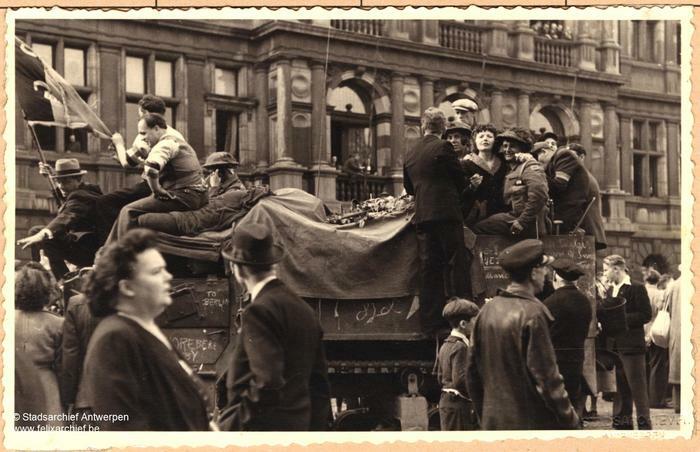
By September Antwerp had been taken. Montgomery overlooked the fact that the approach channel was vital, and didn’t secure it, but set off operation Market garden. The idea of that was to send three airborne divisions to capture three bridges. If successful that would’ve opened the way into Germany, but it failed. Arnhem was the bridge too far.
Ships couldn’t get to Antwerp without negotiating the estuary of the Sheldt. The Germans had had time to build up strong defenses on the island of Walcheren.
The Canadians launched an attack which had ended in a massacre. Now Manfred Gans was to go in with 41 RMC . The North of the island had high dunes along it meaning that vehicle couldn’t land there. The rest of the coast was made up of dykes which kept the sea off the land which was below sea level. Bombers had destroyed the dyke near WestKapell flooding the town and the land. That made it even easier for the germans to defend their strong points.
Gans and Maurice Latimer were going in with 41 RMC. Thoughts of Dieppe were in Gans’ mind. They were going into a well defended town.
A fortuitious naval barage cleared the beach as they arrived and they advanced past the machine gun positions into the town. Their first objective was the light house at the end of the street.
Only 2 of the 28 promised tanks had arrived. Nobody knew what to do. Manfred decided immediate action was called for. He walked down the main street towards the lighthouse and called out “come out and surrender, before our tanks go into action.
A German officer came out and asked who he was. Manfred said he was Bristish commando with half the British army behind him. The officer wanted to surrender but was listing lots of conditions. Gans saw that Latimer was approaching the lighthouse from the side. A few minutes later he came out witha load of German prisoners.
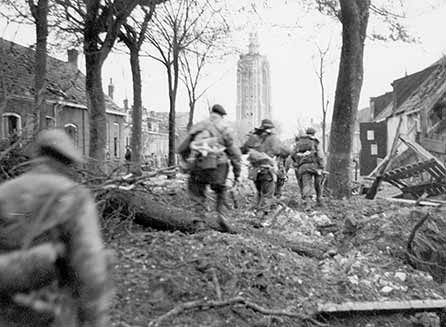
With the dyke having been destroyed the high tide flooded the town. They pulled out to some high land to wait for the tide to go down before facing their next task which were the gun batteries between Wetskapell and Domburg. They had already sunk three support ships and an LCT.
The first stong poi,nt had to be taken by a frontal assault. That went surprisingly well. Gans grabbed a captured sailor and forces him to show theml the path through the mines to the next strong point.
The wind was blowing the sand into their hair, eyes, mouths and guns. With the second battery taken the next objective was the heavily fortified battery at Domburg.
Manfred was leading the commandos through the minefield using his crouching feeling technique. Suddenly 4 Hurricanes dropped out of the sky dropping 500lb bombs.
They all froze. We’ve had it ; they thought.
No bombs fell near them. The pilots had seen their green berrets and made sure to miss them. The bombing had distracted the Germans, giving the commandos time to get into the battery. Gans saw a German soldier taking cover. he shouted” YOU! surrender!”
The German ignored him and ran into the bunker. Grenades rained down on them. When the grenades stopped, Manfred ran into the bunker and came out a few minutes later with three prisoners.
There were more bunkers and the fighting continued till the morning.
Not all X troopers had been so lucky. Robert Hamilton had been killed on the beach. Victor Davies was badly wounded.
The fighting continued for a week after the landings. Manfred was offered a field commission. He was pleased about this. He’d wanted more responsibility but didn’t want to go to officer training. That would take him out of the combat. With a field commission, he skipped officer training.
In December Hitler launched his last ditch effort of the Battle of the Bulge. Manfred was busy during that time interrogating prisoners captured during the fighting.
Manfred had been corresponding with Joan Gerry from New York who had started writing to him. He now got a hand written letter from her instead of the usual typed letter. She admitted that her real name was Anita Lamm, his child hood sweetheart.
He had more good news about his parents. They were still alive but still in a concentration camp at Thernsienstadt.
By the end of April news of Hitlers death was broadcast. There was also rumours that the SS were trying to assassinate as many jews as possible before the war finished. Manfred went to his CO Major Wood. He convinced him to give him a jeep, a driver and some jerry cans of fuel to go the 400mile to Therensienstadt in Czechoslovakia where his parents were held.
On the way they drove through his home town. He saw a British and American flag on his house.
Near the czeck border they met Russian troops. They told him that to get into Czechoslovakia they’d have to go back to the American lines and go another way. They went back, got a letter from the American CO and finally got to Therensienstadt camp. The woman holding all the records found where they were. They had to drive some distance, then she went in to find them and prepare them to meet their son. They spent the evening and the night telling of their experiences in the camp and all the horrors they had seen. Manfred couldn’t take them out. They were too weak, and there was Typhus in the camp.
Manfred and his driver Bob made the return journey and Manfred managed to see Princess Juliana of Holland. His parents were arrested in Holland so they were in the dutch part of the camp.
Not long after wards Princess Juliana arranged for Manfred’s parents to be flown back to Holland and were living in an appartement in Eindhoven.
This incredible saga was taken from the book by Leah Garret, with the title X Troop the, secret Jewish commandos of WWII. In the book’s 350 pages there are many more stories and details. It’s available here